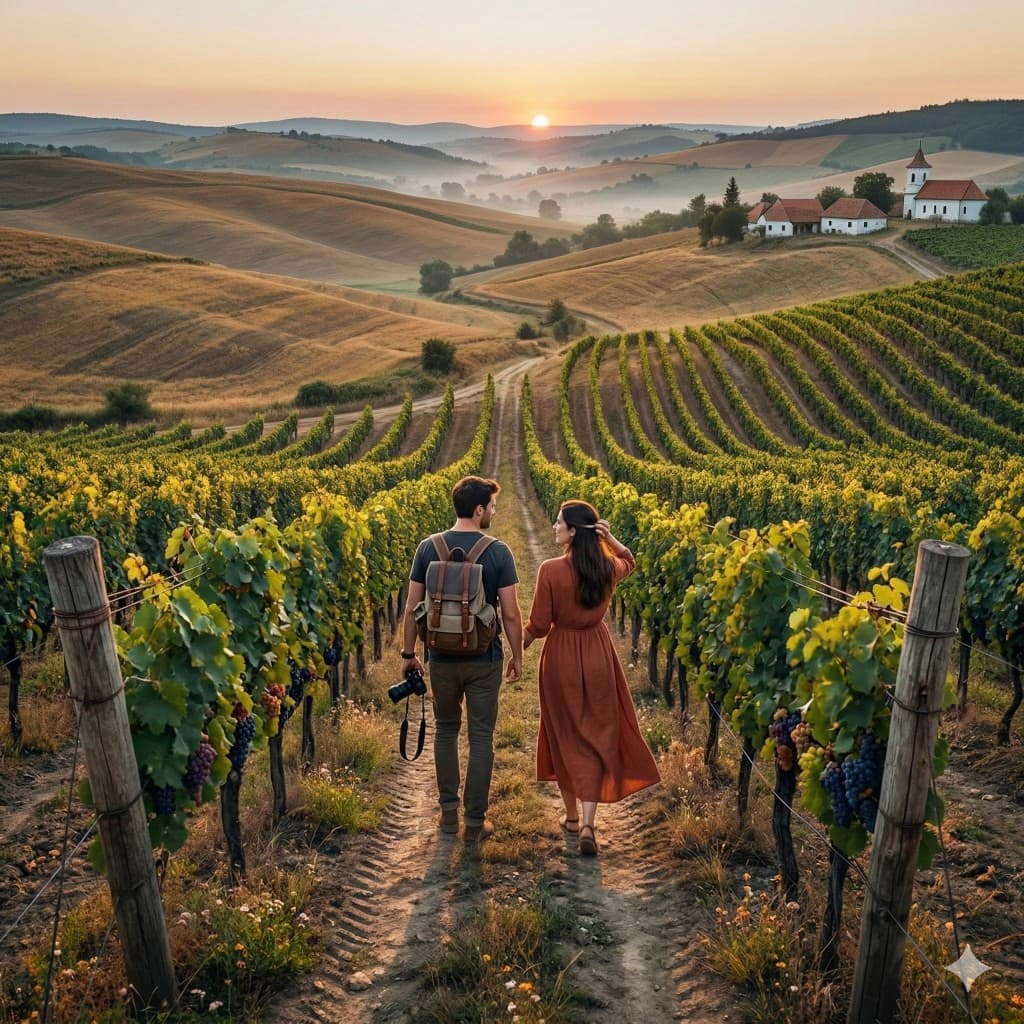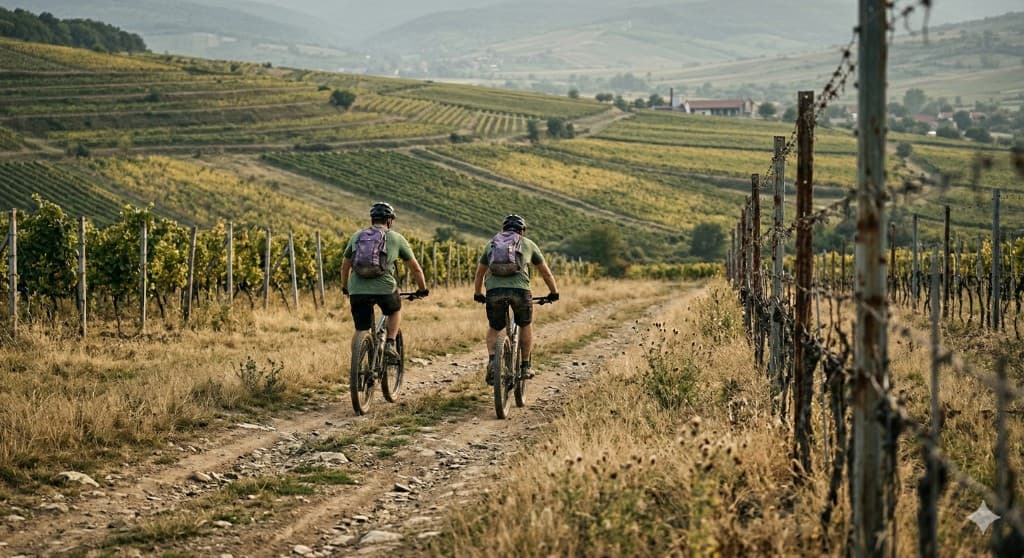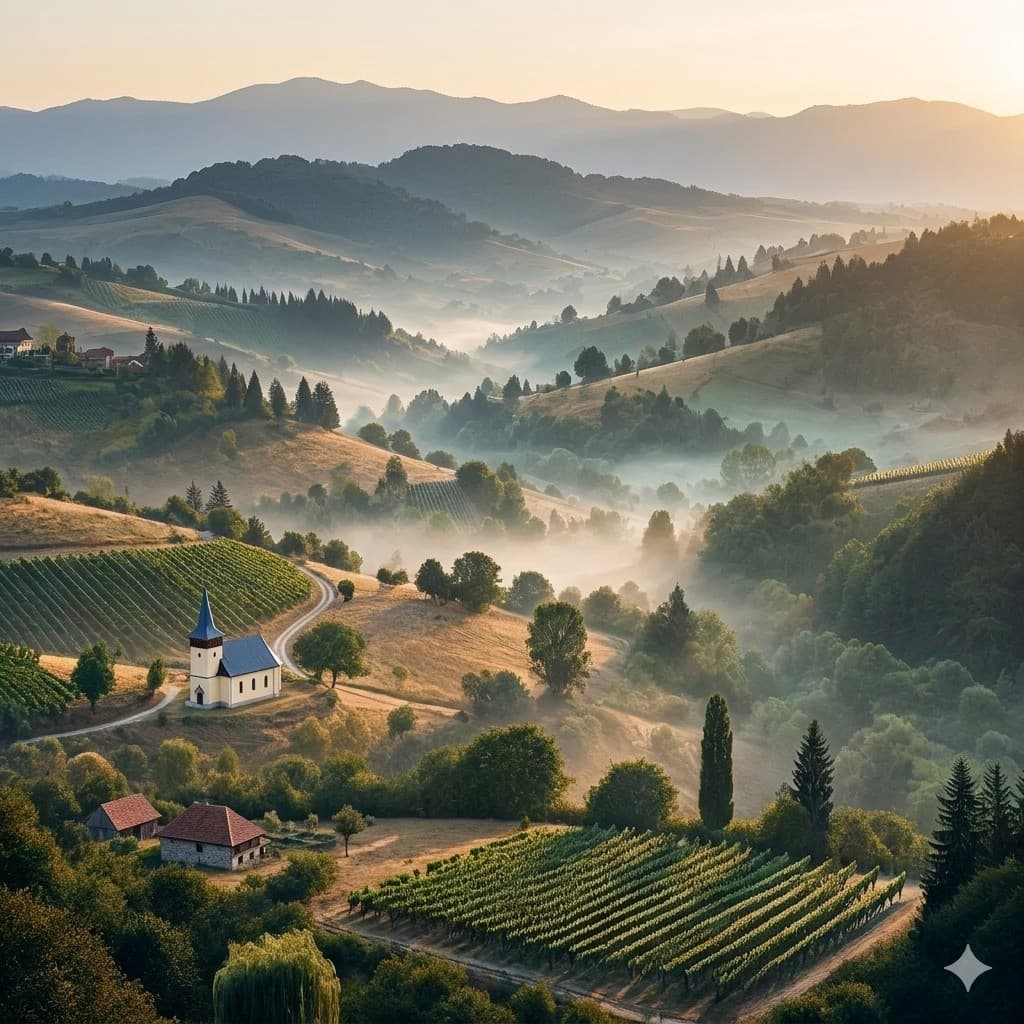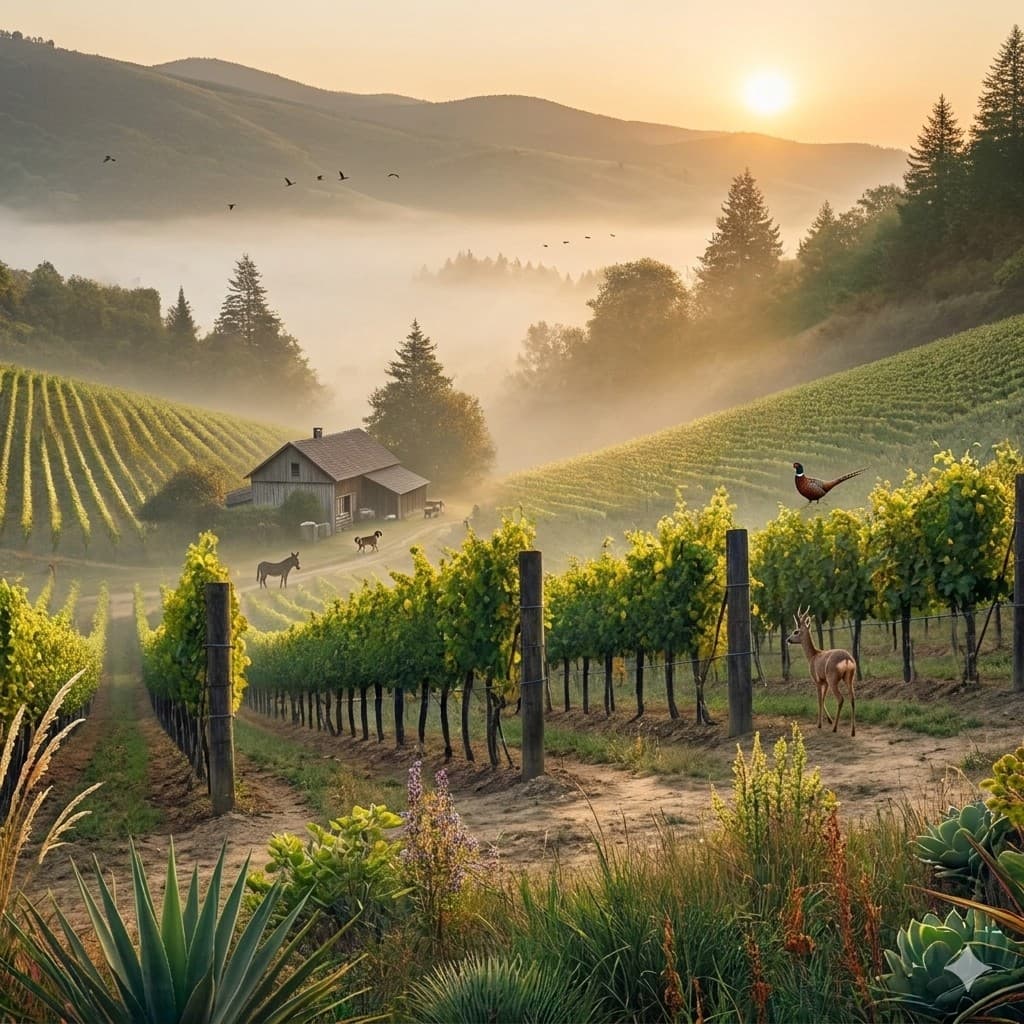
The forests, meadows, and vineyards around Feriland are part of one of Europe's most important wildlife landscapes. Romania hosts a third of the continent's brown bears and a fifth of its wolves — and the Zarand corridor, which passes through these very hills, is a lifeline connecting the Western and Southern Carpathian ranges. This is not a nature reserve behind a fence. It is a living, breathing ecosystem where wild animals go about their ancient routines just meters from where you sleep.
The Residents
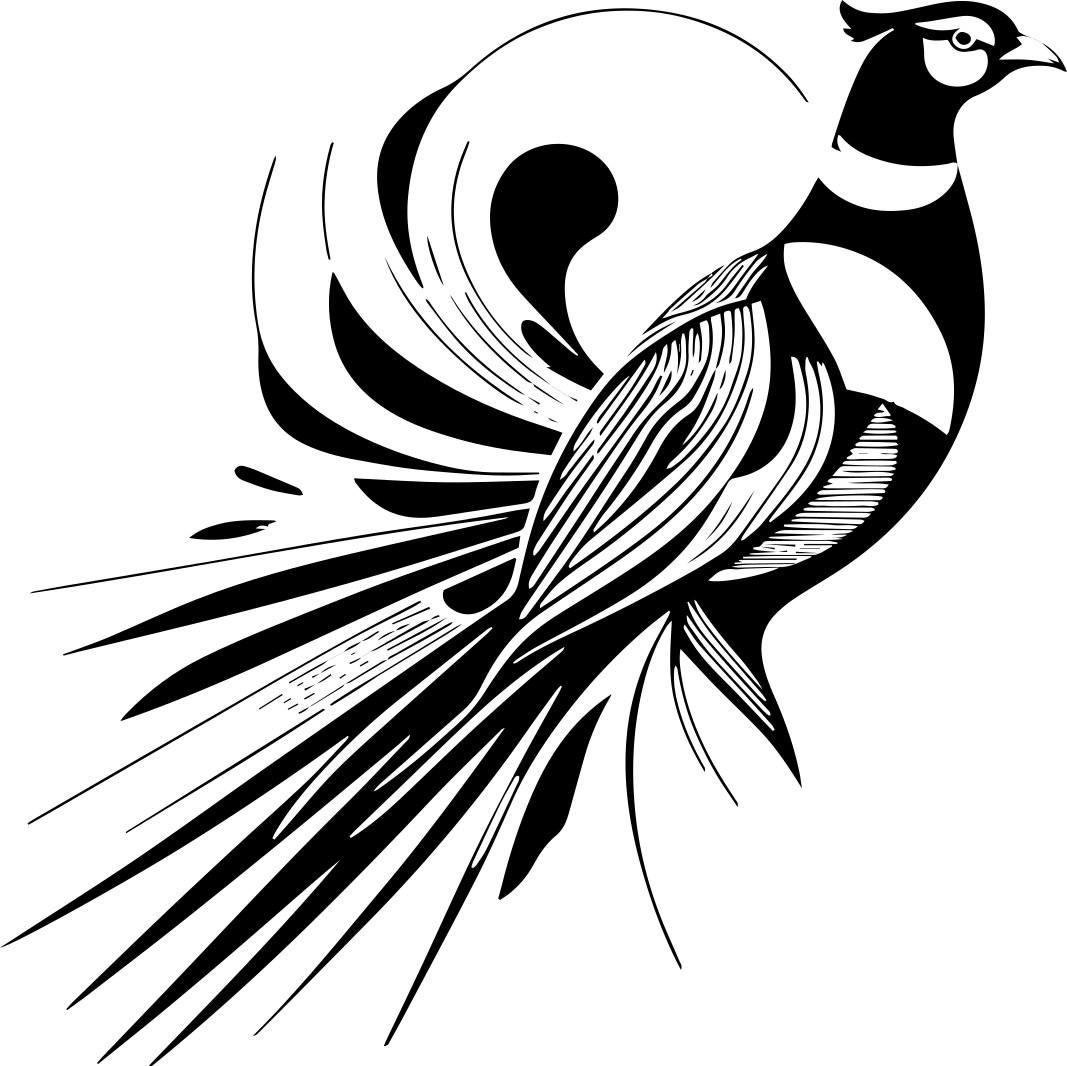
Roe deer are the most common sight, often grazing at the forest edge in the amber light of early morning and late evening. They've grown accustomed to the quiet rhythms of the area and may pause to observe you with the same curiosity you bring to watching them. Pheasants — the symbol of Feriland, whose silhouette graces our logo — strut through the vineyard rows with iridescent copper and emerald plumage. Red foxes slip through the meadows at dusk. European hares bolt across open fields. And the occasional wild boar, though rarely seen, leaves unmistakable evidence of its nighttime foraging in the soft earth along forest trails.

A Birdwatcher's Paradise
For birdwatchers, the Miniș hills are exceptional. The mosaic of habitats — dense forest, open meadow, vineyard, and wetland along the Mureș river — supports an extraordinary diversity of avian species. Golden orioles flash through the canopy with their brilliant yellow plumage and distinctive fluting call. Hoopoes probe the lawn with their long curved bills. European bee-eaters — perhaps the most spectacular of all — arrive in summer, filling the air with color as they hawk insects on the wing. Nightingales sing from the thickets at dusk, and overhead, common buzzards and the occasional lesser spotted eagle ride the thermals above the ridgeline.


The Zarand Corridor
What makes this area ecologically significant far beyond its scenic beauty is its role as a landscape corridor. The Zarand hills form a continuous strip of habitat connecting two of Europe's greatest mountain systems, allowing populations of large mammals — bears, wolves, lynx, and wildcats — to move, disperse, and maintain genetic health. Romania's estimated 6,000 brown bears and 3,000 wolves depend on corridors like this one. Fauna & Flora International has been working with local communities through the Zarand Association to protect this landscape by promoting sustainable agriculture, restoring degraded habitats, and helping farmers coexist with the wild neighbors that have always been here.
At Feriland, wildlife isn't a feature — it's the neighborhood.